

A lesser-known fact about craniosacral therapy is that it is not only beneficial for adults but also for newborns.
Craniosacral therapy for newborns uses a similar treatment style as traditional CST. However, babies’ bodies are extremely fragile, especially in their early lives. That’s why, while the therapy’s concept remains the same, the approach and the execution of the treatment can be quite different.
In this guide, we’ll explain how and why craniosacral therapy can help your child.
What Is Craniosacral Therapy?
Craniosacral therapy, also known as CST, is a gentle, non-invasive hands-on approach that aims to release tensions and compressions throughout the body. However, the particular Focus is on the head or the cranium and the tailbone area, also known as the sacrum.
The whole idea behind this therapeutic technique is based on the concept that the body has natural self-correcting and self-healing abilities.
Using minimal pressure, practitioners can help facilitate these innate healing processes.
How Craniosacral Therapy for Newborns Works
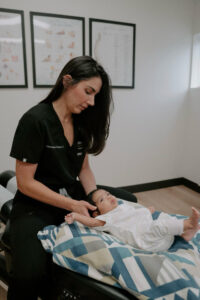
The foundation of cranial sacral therapy lies in the rhythmic flow of cerebral spinal fluid as it circulates through the brain and spinal cord. This rhythm is independent of other bodily rhythms like heartbeat or breathing.
During birth, the incredible pressure exerted on an infant’s head can cause the cranial bones to override or become compressed, which practitioners believe may restrict this natural rhythm and flow.
During a CST session, a trained therapist uses light touch to evaluate the functioning of the cranial sacral system.
They feel for subtle restrictions and imbalances in the craniosacral rhythm, then use gentle techniques to encourage the release of these restrictions. Ultimately, the goal is to reduce tension along the spine and relax the surrounding fascia.
How Craniosacral Therapy Can Help Infants & Newborns
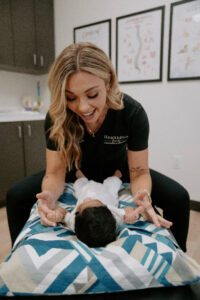
Craniosacral therapy has gained popularity for addressing various common infant challenges. Practitioners and some parents reported multiple benefits, especially for the following issues:
Plagiocephaly
Plagiocephaly occurs when an infant develops a flattened area on one side of their head, often due to spending extended periods in a single position. During birth, the cranial bones naturally overlap to allow passage through the birth canal, and they typically return to proper position within the first month of life. When this doesn’t happen adequately, CST may help:
- Reduce tension in the skull and neck that can contribute to preferential head turning
- Assist cranial bones in returning to their proper position
- Complement repositioning techniques and tummy time are recommended by pediatricians
Tongue Tie
Tongue-tie (ankyloglossia) occurs when the band of tissue (lingual frenulum) connecting the tongue to the floor of the mouth is too tight or short, which restricts the tongue’s movement. Once again, CST may help by:
- Releasing fascial tension throughout the connected facial and oral structures
- Improving the oral range of motion both before and after frenotomy (surgical release)
- Addressing compensatory patterns that may have developed due to restricted tongue mobility
Difficulty with Latching/Breastfeeding
Breastfeeding challenges can stem from various causes, including birth trauma, oral restrictions, or nervous system dysregulation. CST might improve these cases through:
- Releasing tension in the jaw, temples, and throat that can restrict feeding
- Addressing neck stiffness (torticollis) that makes turning to one side difficult
- Calming the nervous system to support more coordinated sucking and swallowing
Acid Reflux
While more research is needed specifically for CST and reflux, practitioners suggest that releasing tension in the diaphragm and vagus nerve (which regulates digestive functions) may help alleviate reflux symptoms by:
- Improving nerve function in the digestive system
- Reducing overall nervous system irritation that can contribute to reflux
- Addressing compression patterns that may affect esophageal function
Colic
A 2019 randomized controlled trial published in Complementary Therapies in Medicine found that CST significantly reduced crying hours and colic severity while increasing sleep hours
Another 2022 study published by ScienceDirect confirmed these findings, showing complete resolution of colic symptoms in many infants after only 2-3 CST sessions.
The proposed mechanisms for these benefits include:
- Calming the autonomic nervous system
- Releasing tension in the head, neck, and digestive structures
- Improving overall regulation in infants struggling with sensory processing
Sleep Disturbances
Once again, this one isn’t exactly rooted in science, as there aren’t many supporting studies. However, many parents report improved sleep patterns following CST, which may be connected to:
- Reduced physical discomfort from tension or birth compression
- Enhanced parasympathetic nervous system activity (the “rest and digest” state)
- More balanced nervous system regulation overall
What to Expect During Craniosacral Therapy Sessions for Your Newborn

Craniosacral therapy may feel like uncharted territory to you, as a parent, especially if it’s your first child.
That’s why it’s important to know what to expect, and you’ll be glad to know that nothing is too alarming here. So, while treatment may vary by condition, a typical session generally includes:
- Setting: The infant may be placed on a soft massage table or comfortably in the parent’s lap. The environment is typically calm and quiet to support relaxation.
- Comfort assessment: The therapist first ensures the baby is comfortable and relaxed before beginning hands-on work.
- Light touch evaluation: Using hands-on contact, the practitioner evaluates the craniosacral rhythm and identifies areas of restriction with very gentle pressure.
- Gentle techniques: The therapist uses subtle manual techniques to release restrictions in the cranial bones, sacrum, and fascia.
- Session duration: Treatments typically last between 30-60 minutes, depending on the infant’s needs and tolerance.
- After effects: Many infants sleep deeply after sessions, while some may experience a temporary increase in crying as their system processes changes.
Note: Most practitioners emphasize that CST should never be painful or uncomfortable for infants. Your child might get a bit restless during the treatment, but if there’s visible discomfort or pain, something is wrong.
Craniosacral Therapy Costs
Now, to talk about the financial impact. Fortunately, it’s not that expensive, at least compared to other medical procedures.
Average Cost of Craniosacral Therapy for Newborns
The cost of CST sessions varies considerably based on geographic location, practitioner credentials, and session length.
While specific newborn pricing isn’t detailed in the search results, general CST sessions typically range from $75 to $250 per session. Initial consultations may be more expensive, and some practitioners offer package pricing for multiple sessions.
Is Craniosacral Therapy Covered by Insurance?
Unfortunately, insurance coverage for CST is often limited or unavailable. Since CST is considered a complementary or alternative therapy by many insurance companies, it may not be covered under standard health insurance plans.
However, it’s worth checking with your insurance provider and the practitioner, as some plans may offer partial coverage when the therapy is performed by certain licensed healthcare professionals (such as chiropractors, physical therapists, or osteopathic physicians) for specific diagnosed conditions.
Finding a Trained Craniosacral Therapist

Any physical therapy is only as effective as the therapist, which is why you need a skilled one.
Who Can Perform Craniosacral Therapy on Newborns?
CST on infants requires specialized training in pediatric applications. Various healthcare professionals may perform CST, including:
- Licensed massage therapists with CST certification
- Chiropractors with pediatric CST training
- Osteopathic physicians (DOs)
- Physical therapists
- Pediatric nurses with CST training
Importance of Finding an Experienced Craniosacral Therapist
Here’s why you should actually spend time and effort to find an experienced craniosacral therapist, even if the procedure is virtually non-invasive:
- Must Have Pediatric Training: Infant anatomy is delicate. General CST training is not enough; they need specific certification for babies.
- Verify Their License: Ensure they are a licensed healthcare professional (e.g., massage therapist, chiropractor, physical therapist) accountable to a regulatory board.
- Proven Experience with Babies: Ask specifically how many newborns they have treated. Experience is irreplaceable.
- Consult Your Pediatrician First: This is a non-negotiable safety step to rule out underlying medical issues.
- Trust Your Instincts: This one is off the book, but you and your baby must feel comfortable and safe with the practitioner.
Recent Comments